
Choosing an APAC Data Center for Cross-Border Business
Select an APAC Data Center by evaluating compliance, connectivity, scalability, and sustainability for secure cross-border business growth.

When you select an APAC Data Center for cross-border business, you face several important factors. You must navigate a complex legal landscape, including laws about real estate, energy, technology, and the environment. You also deal with data sovereignty issues, since regulations differ across APAC markets. Energy consumption challenges push you to consider renewable power options. You need to balance compliance, performance, and growth to keep your business secure and sustainable.
Key Takeaways
Understand local regulations before selecting an APAC Data Center. Compliance with data sovereignty laws is crucial for protecting your business.
Choose a data center with low latency to enhance user experience. Fast connections improve data transfer and support real-time applications.
Monitor energy efficiency using Power Usage Effectiveness (PUE) scores. Lower PUE indicates better energy use and can reduce operational costs.
Research government incentives for data center investments. These can provide financial benefits and support your business growth.
Select a provider with a strong reputation. Reliable service and positive customer reviews are key to ensuring data security and operational success.
APAC Data Center Market Overview
Asia-Pacific stands out as a strategic region for data centers. You see rapid digital transformation and strong market expansion across many countries. Businesses in APAC rely on data centers to support cloud services, artificial intelligence, and digital infrastructure. The region connects Europe and North America, making it a key hub for global data transfer.
Regional Growth Drivers
You notice several factors driving growth in the APAC Data Center market:
The market reached US$ 26.95 billion in 2024.
Experts expect it to grow at a CAGR of 12.70% from 2025 to 2033.
By 2033, the market could reach US$ 79.05 billion.
Digital transformation, cloud deployment, and rising data consumption push this growth.
Asia-Pacific leads global data center investment, with $15.5 billion projected in 2024.
Tokyo and Johor, Malaysia, serve as major hubs due to high demand for AI and cloud.
Advanced telecommunications and favorable regulations in places like Hong Kong attract global providers.
You must understand the regulatory heatmap and market diversity. Each country has unique rules and incentives. Some governments offer support for foreign investment, while others focus on protecting local industries.
Cross-Border Data Trends
Cross-border data flows in APAC have grown quickly. You see data volumes twenty times higher in 2017 than in 2007. By 2022, volumes were four times greater than in 2017. This growth outpaces goods, services, and people, helping developing countries join the global economy.
Governments in APAC create new regulations to protect industries and populations. These laws make the landscape complex. You need to pay attention to data sovereignty and trust issues. The global data governance framework remains inefficient, so you must stay alert to changes in national approaches.
Tip: Always review the latest regulations before choosing an APAC Data Center for cross-border business.
Regulatory Challenges in APAC
You face many regulatory challenges when you choose a data center in the Asia-Pacific region. Each country has its own rules for data storage, security, and investment. You must understand these differences to keep your business safe and compliant.
Data Localization and Sovereignty
Data localization laws in APAC countries can affect your cross-border business. These laws require you to store data inside the country where you collect it. You must follow strict rules to avoid penalties and keep customer trust.
Country | Key Regulation | Description |
|---|---|---|
China | PIPL | Requires businesses to store data of Chinese citizens within China, impacting foreign companies significantly. |
India | 2023 Data Law | Mandates local storage for financial data and may restrict data flows to certain countries. |
Vietnam | PDPD | Requires security assessments for data transfers, one of the strictest regulations in Southeast Asia. |
You see that data sovereignty rules make you choose local providers. These providers help you follow local laws and reduce risks. You also notice that data localization makes compliance easier because your data does not cross borders.
Tip: Always check the latest data localization laws before you select an APAC Data Center for your business.
Export Controls and Security
You must pay attention to export controls and security rules when you transfer data across APAC borders. Some countries have strict regulations to protect sensitive information.
Aspect | Details |
|---|---|
Regulation | |
Effective Date | April 8, 2025 (compliance requirements by October 5, 2025) |
Countries of Concern | China, Cuba, Iran, North Korea, Russia, Venezuela |
Covered Persons | Entities from countries of concern, including those owned by such entities and individuals working for them. |
Covered Data | U.S. sensitive personal data and government-related data, including specific identifiers and geolocation data. |
Transaction Types | Prohibited, restricted (with compliance measures), and exempt transactions. |
Security Requirements | Administrative and technical controls aligned with industry standards for sensitive data and systems. |
You need to use strong security controls to protect personal and government data. You must follow industry standards and complete security assessments before you transfer data.
Foreign Investment Rules
Foreign investment rules can change how you set up and run a data center in APAC. Some countries make it easier for foreign companies to invest, while others have strict limits.
Country | Evidence |
|---|---|
China | Recent lifting of restrictions on foreign investments in data centers effective Nov. 1.39 |
Vietnam | Removal of the foreign ownership cap in July 2024, promoting data center establishment. |
Japan | Recent trends indicate a shift towards more favorable conditions for foreign investment. |
Singapore | Enhanced growth and operational efficiency due to favorable foreign investment regulations. |
You see that China and Vietnam now allow more foreign ownership. Japan and Singapore also offer better conditions for foreign investors. These changes help you expand your business and improve operations.
Government Incentives
Governments in APAC offer many incentives to attract data center investments. You can benefit from tax breaks, subsidies, and other support.
Country | Incentives |
|---|---|
Malaysia | Investment Tax Allowance of 100% on Capex for up to 10 years; investment in submarine cable network. |
Indonesia | Up to 100% tax reduction for 5-20 years for investments over US$30 billion; lower electricity prices. |
Thailand | Up to 8 years corporate income tax exemption; reduction of import duties on machinery. |
Japan gives subsidies for AI and semiconductor development, which helps high-performance computing projects.
Singapore, Japan, and South Korea use tax incentives and fast-track zoning to attract new data centers.
Note: You should review government incentives before you choose a location for your APAC Data Center. These incentives can lower your costs and help your business grow.
You must understand the complex regulations in APAC. You need to follow data localization laws, export controls, and investment rules. You also benefit from government incentives. These factors help you make smart choices for your cross-border business.
APAC Data Center Infrastructure
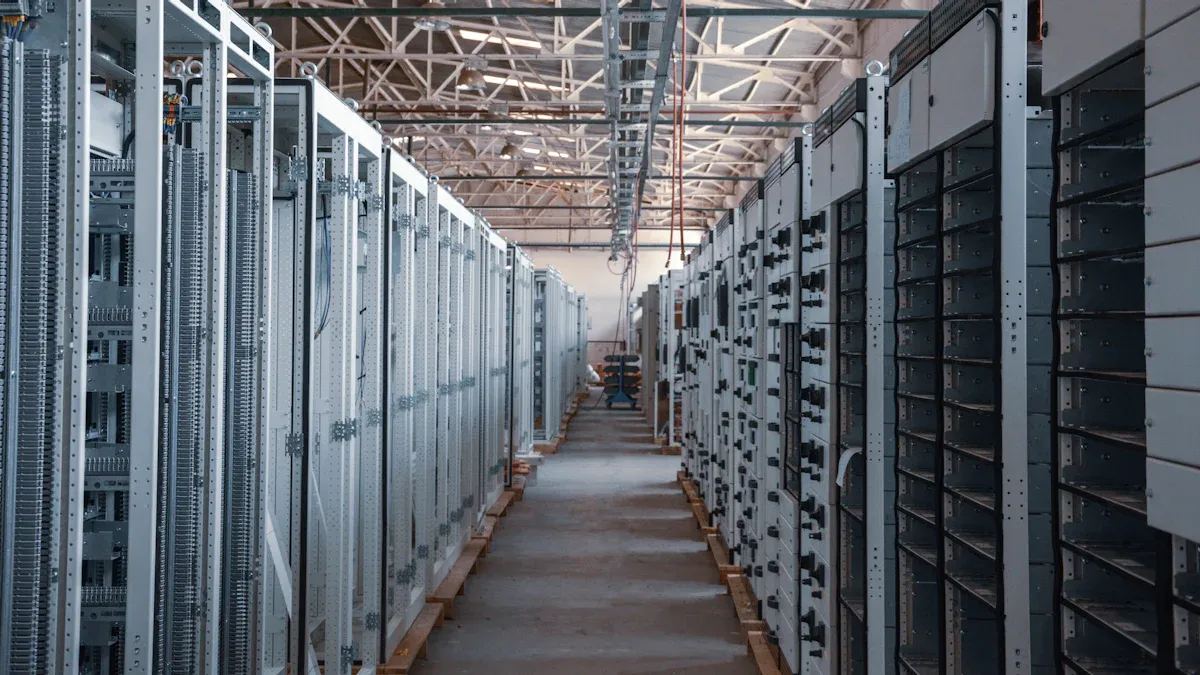
Connectivity and Latency
You need strong network connectivity for your business to run smoothly. Fast connections help you transfer data quickly between locations. Data centers in APAC use modern network designs like Spine-Leaf and Mesh. These designs make your network scalable and boost performance. High-speed switches and fiber optics keep your data moving without delays.
You can see how latency changes between different cities. For example:
Metro Area | Latency (µs) |
|---|---|
Sydney (SY1 to SY2) | |
Sydney (SY1 to CA1) | 4.9 ms |
Canberra (CA1 to SY1) | 4.9 ms |
Los Angeles acts as a major hub for APAC connections. It offers lower round-trip times to Tokyo, Sydney, and Singapore. This helps you deliver real-time services like gaming and streaming.
Tip: Choose a data center with low latency to improve user experience and support time-sensitive applications.
Submarine Cables and IXPs
Submarine cables form the backbone of international data traffic. They connect countries and make cross-border business possible. Internet exchange points (IXPs) help networks share data faster and more reliably.
Submarine cables support most international telecommunications in APAC.
IXPs make data exchange more efficient and improve connection speed.
Singapore is a key hub for subsea cables in Southeast Asia. Over 99% of its international traffic uses these cables.
Singapore’s history with telegraph cables shows its long-standing role in global connectivity. Today, its advanced cable networks help you reach markets across the region.
Reliability and Uptime
You want your APAC Data Center to stay online. Leading data centers now have fewer outages than before. In the past three years, half of all centers had at least one major outage, but this number is dropping. Still, some outages cause serious problems.
Most data centers promise high uptime. You often see guarantees like 99.9% or 99.99%. A 99.9% uptime means about 8.76 hours of downtime each year. A 99.99% guarantee allows only about 53 minutes of downtime per year.
Note: Always check the uptime guarantee before you choose a data center. High reliability keeps your business running and protects your reputation.
Sustainability in APAC Data Centers
You face rising electricity consumption when you operate an APAC Data Center. You must focus on green initiatives to keep your business sustainable and efficient.
Energy Efficiency
You can improve energy efficiency by following global standards. Many APAC data centers use these benchmarks:
The European Union's Energy Efficiency Directive sets strict requirements.
California's Title 24 includes rules for cooling, lighting, and power distribution.
The Green Grid's Power Usage Effectiveness (PUE) is a common benchmark.
You track PUE to measure how well your data center uses energy. You calculate PUE by dividing total facility energy by IT equipment energy. The ideal PUE score is 1.0, but most data centers reach an average of 1.55. Lower PUE means better efficiency and lower costs.
Tip: Always monitor your PUE score to find ways to save energy and reduce your carbon footprint.
Renewable Power Options
You can choose renewable power sources to make your data center greener. Solar, wind, and hydroelectric energy help you lower emissions. Some governments in APAC offer incentives for using clean energy. You can also join green power programs to show your commitment to sustainability. These steps help you meet local regulations and attract eco-conscious customers.
Water and Cooling
Cooling systems use a lot of water in data centers. Water Usage Effectiveness (WUE) helps you measure how much water you use for cooling compared to your energy consumption. In APAC, water scarcity is a concern, so many data centers use air cooling to save water. You may also see advanced liquid cooling systems that handle high heat loads from AI and big data. These systems help you manage server density and keep your operations efficient.
Data centers use about 25% of their water for cooling. You must choose cooling solutions that fit your local environment. Sustainable water management protects local resources and supports long-term growth.
Note: Pick cooling technologies that match your region’s climate and water supply to keep your data center sustainable.
Market Demand and Workforce
Customer Base and Industry Clusters
You see strong demand for data center services in APAC. Artificial Intelligence and cloud services drive this growth. Many industries need reliable data centers. IT service providers, e-commerce companies, and banks lead the way. Hyperscalers also play a big role, especially in cities like Bangalore and Chennai. In Hong Kong, IT and banking firms compete for data center space. Southeast Asia attracts hyperscalers, with Malaysia and Indonesia seeing rapid growth.
Here are some major industry clusters in APAC cities:
City | Key Characteristics | Major Players |
|---|---|---|
Tokyo | Enterprise demand and AI-driven absorption | NTT Global Data Centers, Equinix Japan, Colt DCS, Digital Realty, Digital Edge |
Sydney | Colocation ecosystem with global subsea links | NextDC, Equinix, AirTrunk, CDC Data Centres |
Mumbai | Gateway for global connectivity | NTT GDC India, Yotta Infrastructure, CtrlS Datacenters, STT GDC India |
Ho Chi Minh City | Rapid market scaling | FPT Telecom, Viettel IDC, VNPT IDC, CMC Telecom |
Shanghai | Colocation dominance through data-sovereignty laws | China Telecom, Shanghai Data Solution, China Unicom |
Beijing | Large-scale enterprise workloads | China Telecom, Shanghai Data Solution, China Unicom |
Melbourne | Driven by AI workloads | NextDC, AirTrunk, CDC Data Centres, Equinix |
Seoul | Largest market in South Korea | N/A |
Kuala Lumpur | Fastest-growing hub in Southeast Asia | YTL Data Centers, Bridge Data Centres, STT GDC, GDS Holdings |
Jakarta | E-commerce demand and digital policy support | Princeton Digital Group, DCI Indonesia, STT GDC Indonesia, BDx Indonesia |
Skilled Talent Availability
You need skilled professionals to run data centers. The industry faces a shortage of workers, especially in AI, machine learning, and cybersecurity. Uptime Institute predicts that almost 2.3 million workers will be needed by 2025, with most jobs in Asia Pacific. In May 2024, more than 2,500 job postings targeted data center roles across the region.
Evidence Type | Description |
|---|---|
Skills Shortage | Critical shortage in AI, machine learning, and cybersecurity |
Workforce Demand | Nearly 2.3 million needed by 2025, mostly in Asia Pacific |
Job Postings | Over 2,500 live postings in May 2024 across APAC |
Tip: You should invest in training and public-private partnerships to build a strong workforce.
Expansion Potential
You see huge expansion potential in APAC. The region is set to grow at a 12.5% CAGR in colocation demand from 2023 to 2028. By 2026, APAC may account for half of the global colocation market. Energy supply is a key challenge, but APAC leads in supply growth. Governments support expansion with digital and sustainability initiatives, such as Hong Kong’s I&T center, Malaysia’s MyDigital, and Singapore’s Green Plan 2030.
Everything-as-a-Service (XaaS) is changing how businesses use IT. IDC predicts 65% of customers will adopt XaaS by 2026.
You need more skilled engineers and technicians. Public-private partnerships help develop talent for future growth.
Note: You should consider workforce and energy supply when planning your data center expansion in APAC.
Risk and Compliance Management
Security and Compliance
You must protect your data and follow strict rules when you use an APAC data center. Security and compliance frameworks help you keep information safe and meet legal requirements. Many data centers in the region use well-known standards to guide their security practices.
Here is a table showing some common frameworks:
Framework Name | Description |
|---|---|
ISO/IEC 27001 | A globally recognized standard for information security management systems, outlining requirements for effective ISMS. |
The Essential Eight | A set of prioritized cybersecurity strategies developed by ASD to protect against cyber threats. |
SMB 1001 | A multi-tiered cybersecurity standard designed for small- and medium-sized businesses, offering scalable controls. |
Singapore Cyber Safe | A program that enhances cybersecurity posture in Singapore, providing guidance and certification schemes for SMBs. |
You see that ISO/IEC 27001 sets the global benchmark for managing information security. The Essential Eight gives you practical steps to block cyber threats. SMB 1001 helps small and medium businesses scale their security. Singapore Cyber Safe supports local companies with guidance and certification.
Tip: Always check if your data center follows these frameworks. This helps you avoid risks and meet compliance needs.
Disaster Recovery
You need a strong plan to keep your business running during emergencies. APAC data centers use several strategies to prepare for disaster recovery and business continuity. These steps help you recover quickly and protect your data.
Training team members keeps everyone ready for their roles in a crisis.
Embracing automation reduces mistakes and keeps important systems working.
Investing in IT builds backup systems for communication and data protection.
Moving to the cloud lets you run applications in many data centers, so you can recover faster.
Prioritizing reporting gives you quick updates for your team and customers.
Auditing the business continuity plan makes sure you follow the latest standards and rules.
Clear communication helps everyone know what to do and when to act.
You should practice these steps often. Regular training and reviews make your recovery plan stronger. Automation and cloud services give you more options to stay online during disruptions.
Note: Test your disaster recovery plan every year. This helps you find problems before they affect your business.
Provider Reputation
You must choose a data center provider with a strong reputation. Good providers offer reliable service and keep your data safe. You can use several criteria to judge a provider’s reputation.
Criteria | Description |
|---|---|
Market availability | Assessment of renewable energy options available in the market. |
Scalability | Ability to address the load size of the data center. |
Cost | Financial implications of renewable energy procurement. |
Non-delivery risk | Risks associated with the failure to deliver renewable energy as promised. |
You should also look at different risks that can affect your provider:
Infrastructure risks
Energy risks
Environmental risks
Business risks
Political risks
Legal risks
A provider with strong market availability and scalability can support your growth. Low costs and reliable energy supply help you manage expenses. You must watch for non-delivery risk, which means the provider might not deliver promised services. Infrastructure and energy risks can cause downtime. Environmental and business risks affect long-term stability. Political and legal risks can change the rules for your data center.
Tip: Research your provider’s history and customer reviews. This helps you pick a partner you can trust.
When you choose an APAC Data Center for cross-border business, you must focus on three main factors:
Infrastructure and environmental risks
Network connectivity
Scalability for future growth
You should also review this checklist:
Flexibility for new technology
Strong security and compliance
Reliable facility maintenance
Clear service agreements
Consult industry experts and use resources like LexisNexis Risk Solutions or DC Byte for deeper insights.
FAQ
What is data sovereignty in APAC?
Data sovereignty means you must store and process data inside the country where you collect it. Each APAC country has its own rules. You need to follow these laws to keep your business safe.
How do you check a data center’s reliability?
You can look at uptime guarantees. Most providers promise 99.9% or higher. Ask for recent outage reports. Reliable centers share their performance history.
Why does energy efficiency matter for data centers?
Energy efficiency helps you lower costs and reduce your carbon footprint. Efficient data centers use less power. You also meet local regulations and attract eco-friendly customers.
What security standards should you look for?
You should check for ISO/IEC 27001 certification. This standard shows strong information security management. Ask about other local frameworks like Singapore Cyber Safe.
How can you plan for future growth in APAC?
Choose a data center with scalable infrastructure.
Look for flexible service agreements.
Check if the provider supports new technologies like AI and cloud.
See Also
Understanding VAT, Customs, And Data Residency For Compliance
AI-Driven Supply Chains: Exploring Layered Architectural Designs
Choosing The Best Tools For Effective Data Migration