
Simplify the stack, reduce data platform TCO, outpace your rivals
Industry shift to unified lakehouses and open table formats reduces duplication and TCO; actionable consolidation steps and a pilot checklist—read now.
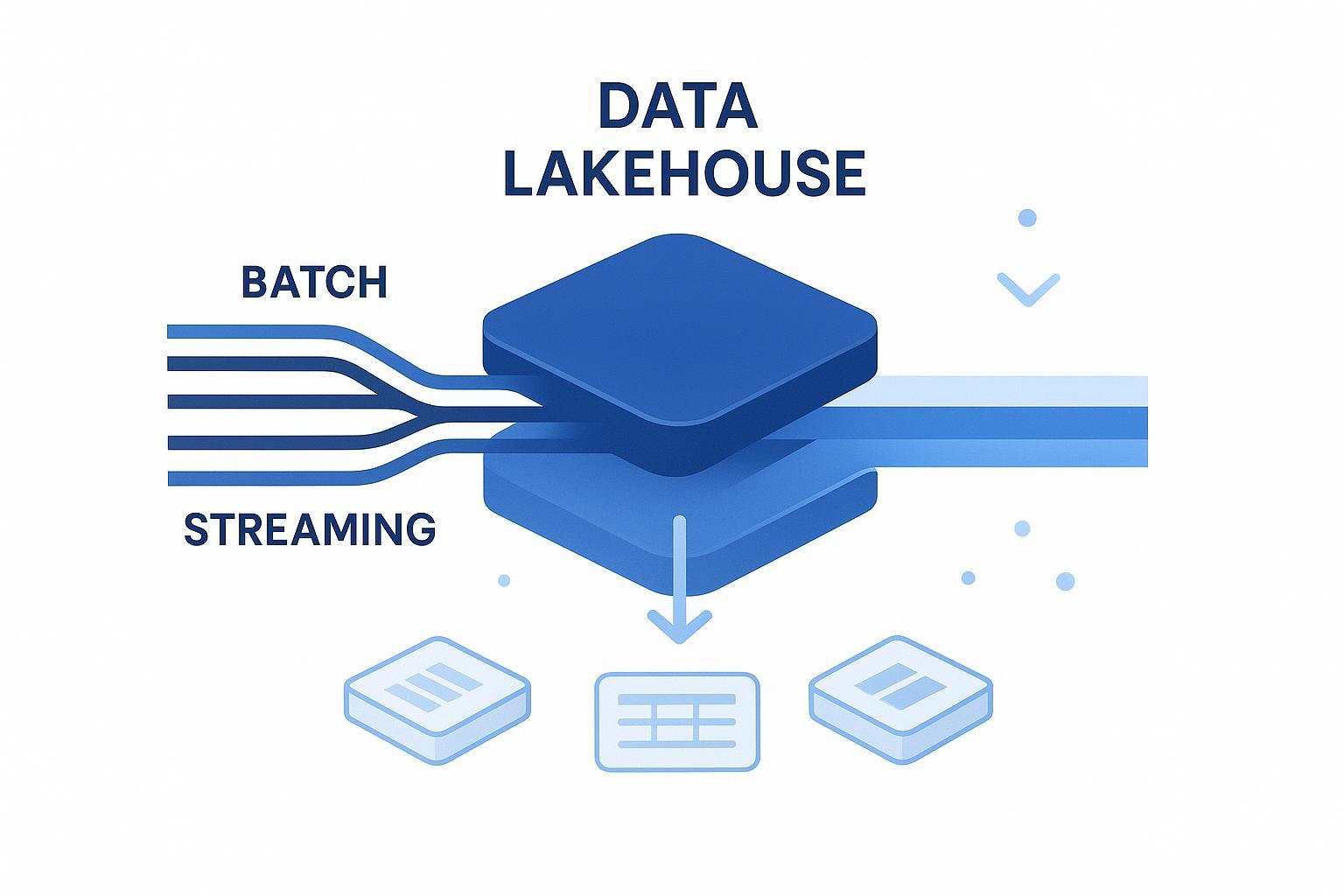
A hard truth for 2026: complexity is the silent tax on your data team. Every extra engine, pipeline, and catalog adds toil, slows incident response, and obscures who pays for what. Simpler architectures don’t just look neat on a diagram—they translate into lower spend and faster iteration.
Across the industry, consolidation is in motion. Open table formats and unified lakehouse patterns are maturing, while vendors add cost visibility and serverless controls. The direction is clear; the details demand careful design.
Why multi stack complexity inflates total cost
The biggest driver of waste isn’t raw compute—it’s duplication. Separate streaming and batch stacks create two ingestion paths, two governance planes, and two places for schema drift to bite. Each new tool increases patching, on-call, and reprocessing overhead. FinOps guidance emphasizes cost allocation as a first principle, making ownership visible and actionable across shared resources, as defined in the FinOps Foundation Allocation capability (2024). When complexity blurs ownership, TCO swells: more incidents, longer MTTR, and more specialists to keep the lights on.
Unified lakehouse on open formats
Open table formats enable one durable source of truth with ACID style guarantees and time travel across engines. That means batch and streaming can converge on a single table abstraction with consistent governance rather than duplicating data for every workload. The trend toward a streamhouse model—unifying streaming and lakehouse under one architecture—has been documented by Apache Fluss, which highlights reduced duplication and simplified pipelines in its 2025 posts, including the unified streaming lakehouse overview. Adoption of open formats across the broader ecosystem is likewise accelerating, as noted by Data Engineering Weekly’s 2025 state of the lakehouse.
A practical way to reduce data platform TCO
If your mandate this quarter is to reduce data platform TCO, pursue consolidation along two tracks. First, standardize on an open table format so multiple engines can share one copy with proper isolation and time travel; this removes redundant pipelines and shrinks storage, governance, and incident costs. Second, bring in cost controls where you run workloads. In 2025, Databricks added budget tags, system tables for spend analysis, and a built in AI BI cost dashboard to expose unit economics and tighten governance, as outlined in the Databricks SQL cost visibility updates. Microsoft Fabric’s March 2026 release emphasized serverless behavior and workspace monitoring to reduce idle costs and improve observability, captured in the Fabric March 2026 feature summary. Together, format standardization and spend visibility are the practical levers your team can pull now to reduce data platform TCO without stalling delivery.
TCO teardown table before and after consolidation
Below is a compact model that shows how simplification changes line items. Use it to guide your own assumptions and unit metrics.
Cost component | Before multi stack | After unified lakehouse on open format |
|---|---|---|
Storage and copies | Multiple copies across batch and stream | Single authoritative copy with snapshots |
Compute utilization | Standby clusters and manual scaling | Autoscaled or serverless with budgets |
Data movement and egress | Cross system transfers and reprocessing | In place processing on open tables |
Software and licenses | Several engines and orchestration tools | Fewer engines and simplified orchestration |
Headcount | Specialists per engine and pipeline type | Cross skilled team on one abstraction |
Incident and MTTR | Fragmented lineage and duplicate failure paths | Single lineage and faster rollback |
Micro use case a short contrast from the field
A mid market retailer ran Spark for batch ETL into a warehouse, Flink for clickstream updates, and a separate catalog for BI. Two ingestion paths and bespoke governance meant duplicate bronze to silver logic, opaque pipeline ownership, and costly reprocessing each time schemas shifted.
They piloted a consolidation on an Iceberg style open format with one ingestion path serving both continuous and scheduled jobs. The same table snapshots fed BI and data science, and rollback handled bad updates without full reloads. Unit metrics such as Cost per Job and TB Scanned became visible through the platform’s native billing tables and tags, enabling team level budgets. A single governance plane reduced incident blast radius and improved on call rotation sanity.
For teams assessing platforms to operationalize a similar pattern, Singdata Lakehouse can be used to standardize on an open table foundation with incremental compute while keeping one architecture for streaming, batch, and analytics. The value here is not a headline claim—it is the quiet removal of duplicate pipelines, the clarity of ownership, and the steady ability to reduce data platform TCO month over month.
Migration blueprint that keeps risk low
Start with a pilot that replaces one end to end workflow on an open table format, including lineage and rollback tests.
Run coexistence while you validate correctness, backfills, and cost allocation; define a clear rollback plan.
Automate validation with contract tests, data quality checks, and unit economics dashboards tracking Cost per Query, Job, and TB Scanned.
Cut over by domain and retire redundant pipelines early; fold on call duties into a single rotation and track MTTR deltas.
What to watch next
Format interoperability and catalogs keep evolving, as do serverless controls and cost dashboards. Keep an eye on cross engine semantics for time travel and schema evolution, and refresh your cost model quarterly. If you need a compact refresher on format trade offs, this comparison of Apache Iceberg vs Delta Lake offers a vendor neutral overview. For layering patterns that tame duplication, see our Medallion explainer on Bronze Silver Gold data pipelines.
Closing thought
Here’s the deal: architecture is strategy. When you reduce data platform TCO by removing duplicate engines and pipelines, you don’t just save money—you buy iteration speed and accountability. The next competitive move is simple, not grand. Which engines and pipelines can you retire this quarter without losing capability—and how quickly will that show up in your unit economics?