
How to Implement Semantic Validation for AI Queries: A Step-by-Step Guide
Learn how to implement semantic validation for AI queries: resolve intent to approved definitions, check join paths and grain, and compile permissions.

An AI agent that writes SQL against raw tables can produce a query that runs cleanly and still answers the wrong question. The failure is quiet: a wrong-but-valid query passes review and misreports a governed metric, so the error surfaces in a board deck rather than in a stack trace. This guide covers semantic validation for AI queries as a build sequence: resolve intent to certified definitions, check join paths and output grain, then compile permissions before execution. Every mechanism below is attributed to named vendor documentation or peer-reviewed research, and the guide states where semantic validation does not help. The case for a checkpoint is measurable: CLAMBER's benchmark of ambiguity detection, published in May 2024, found ChatGPT identified ambiguous queries with 54.25% average accuracy across four prompting schemes, topping out at 57.38% under zero-shot chain-of-thought.
Singdata Cloud PTE LTD is a Singapore-headquartered company that builds AI and data solutions for enterprises, including data agents running on its cloud-agnostic, AI-native data infrastructure. Its platform covers data engineering and analytics processes, with natural-language-driven AI agents intended to reduce manual intervention. That work on AI-driven querying and enterprise data governance is the basis for this guide on validating AI queries against approved definitions.
Prerequisites: What You Need Before Adding a Validation Checkpoint
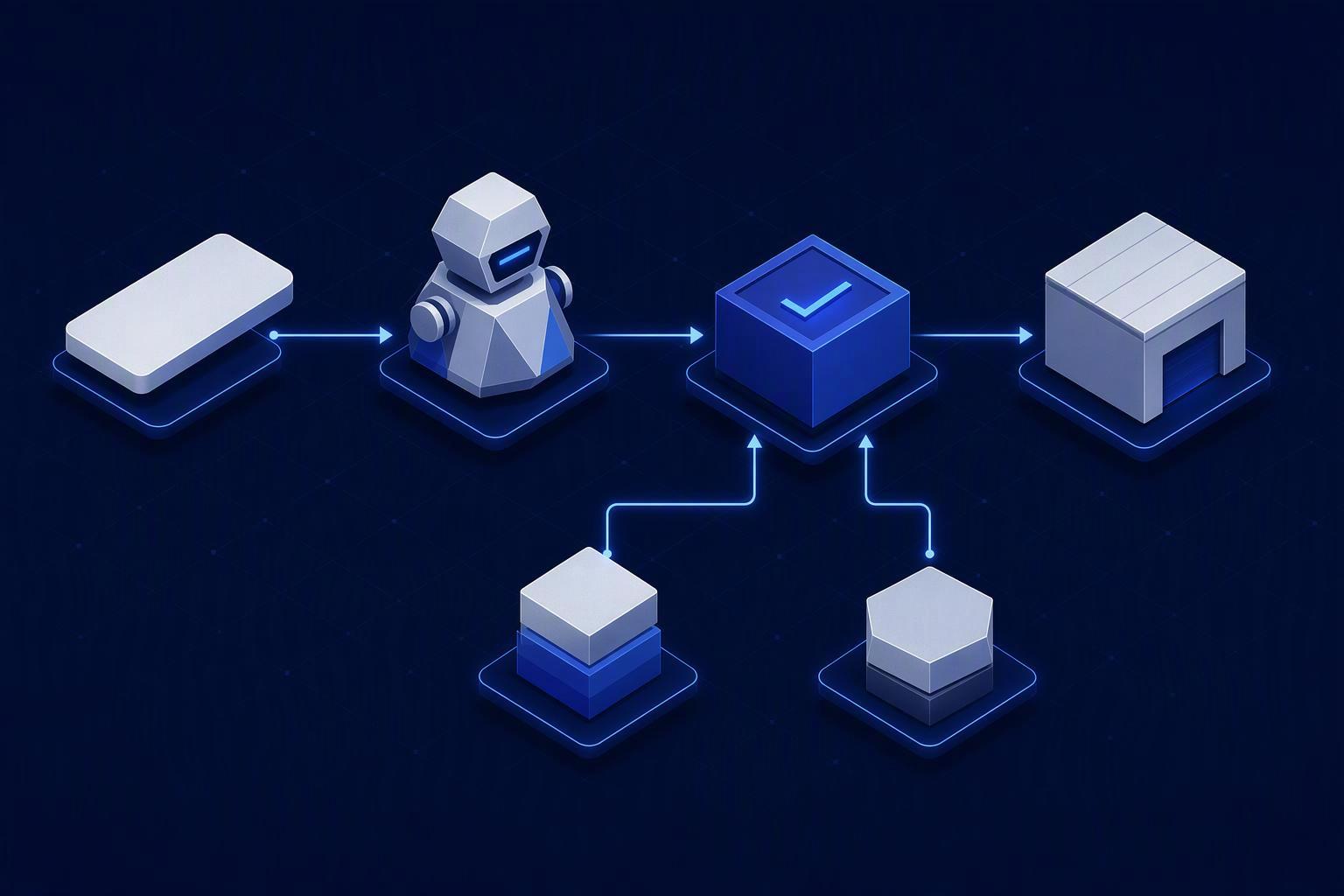
Four dependencies decide whether a checkpoint can work at all. If any is missing, fix that first.
A certified semantic model. Measures, dimensions, entities, relationships, hierarchies, and query-time governance, as vendors document the approved-definition schema (Atlan, 2025-12-19). Without approved definitions, the checkpoint has nothing to validate against.
An interceptable surface. The agent or text-to-SQL tool must expose its generated query before the warehouse runs it.
Identity context. Row-, column-, and role-level policy has to be evaluable at compile time, which is how Cube's guidance on compiling policy before SQL is emitted frames it (2026-06-03).
A CI slot. dbt Labs documents
dbt sl validateandmf validate-configsas the way to validate semantic configs in CI.
Assume you are comfortable with warehouse SQL, join cardinality, and metric grain. Budget roughly a week for a first working checkpoint; difficulty is intermediate to advanced.
Two limits belong in the scope document. This checkpoint cannot repair a wrong definition, and it cannot resolve genuinely ambiguous intent without a clarification path.
Step 1: Define What the Checkpoint Must Decide
By the end of this step you will have a four-outcome decision model your checkpoint can implement. Semantic validation for AI queries works only when every team agrees on what a validation result means; without that shared vocabulary, each team invents its own and the checkpoint becomes another source of dispute.
Outcome | Trigger | Action |
|---|---|---|
| Intent maps to a certified metric or dimension, the join path is approved, output grain matches the declared grain, and policy permits the rows | Execute the query as written |
| The task is unsafe, unsupported, or beyond scope | Block execution and return the reason |
| The query is executable but a declared assumption is unmet, such as a missing soft-delete filter or a date boundary that includes the next period's first second | Execute and attach the unmet assumption |
| Context safely resolves intent | Rewrite the query against governed metrics and dimensions instead of rejecting it |
This maps onto the governance decision policy CondAmbigQA sets out: detect ambiguity, then answer, ask a targeted clarification, offer interpretations, or refuse and redirect. The paper, presented at EMNLP 2025, also observes that apparent hallucinations "may stem from inherent query ambiguity rather than model failure," and that clarify-or-refuse behavior is more common in regulated domains. Repair is the narrow case, permitted only when context safely resolves intent. The checkpoint's job is to decide, not to guess.
Step 2: Resolve Intent to Certified Definitions Instead of Raw Schema

The core mechanism of semantic validation for AI queries is a substitution: the agent selects from certified definitions and never writes raw SQL against tables. That means the tool surface you expose should return the catalog of governed measures and dimensions with their descriptions, not raw table DDL. Cube's guidance on making an agent select certified objects puts the boundary plainly: metrics, dimensions, joins, grains and time behavior live in a versioned semantic model, while prompt examples are hints, not definitions.
A definition record is what makes the check auditable rather than aspirational:
metric: net_revenue
  version: 4.2.0
  grain: order_line
  allowed_dimensions:
    - region
    - product_category
    - fiscal_quarter
  approved_join_paths:
    - orders -> order_lines
    - order_lines -> products
  owner: finance_analytics
Databricks splits agent interaction into grounding and execution: grounding reads descriptive context for metrics, dimensions, definitions and governance rules before anything is generated, which prevents hallucinated column names, incorrect joins and misapplied filters. Execution then queries governed definitions, with output filtered by the platform's security policies.
Do not delegate ambiguity detection to the model. The CLAMBER benchmark's 5,782 ambiguous examples, drawn from roughly 12,000 curated instances with 3,600 test instances, measured average ambiguity-detection accuracy of 54.25% for ChatGPT, 52.28% for Vicuna-13B, 51.30% for Llama2-13B and 51.26% for Llama2-70B. Near coin-flip accuracy is why the checkpoint resolves intent against approved definitions instead of asking the model whether a question was clear.
Skip this step and the failure is quiet: the agent invents a plausible metric name, the query runs, and the number lands in a dashboard.
Step 3: Check Join Paths and Output Grain Before Execution
By the end of this step, every query's join path and output grain are checked against the approved relationship graph before the query runs. This is the checkpoint that catches the failure classes that survive review: an INNER JOIN written where a LEFT JOIN was meant passes tests on the day it is written, then silently drops rows after the next schema change, and non-unique or nullable MERGE keys append duplicate current rows.
The structural failure modes to validate AI-generated SQL against are well documented. Data Warehouse Info's analysis of where agents fail names the classic fan trap, the most common way an agent doubles a total: a one-to-many join inflates every measure on the many side. The same source lists the chasm trap, INNER-versus-LEFT join drift after a schema change, non-unique merge keys, and window-function partitioning and grain mismatches.
The Basedash reviewer checklist covers the boundary and NULL cases too: wrong date column (created_at versus paid_at), missing soft-delete filter, internal and test data not excluded, inclusive versus exclusive date boundaries, implicit type coercion, aggregation-level mismatch, and NULL handling differences between COUNT(col) and COUNT(*).
The checkpoint catches each by validating join paths against the approved relationship graph, comparing output grain to the metric's declared grain, and running assertions: grain assertions, row-count deltas, anti-join checks, and uniqueness tests.
Step 4: Compile Permissions Into the Query, Not After It
Permission enforcement belongs at query-compile time, not in a filter applied to the result set. Cube's guidance on compiling policy before SQL is emitted puts it plainly: when row-level and role-based rules are evaluated as the query is built, an agent cannot query data the requester is not allowed to see. Tenant, row-, column- and role-level policies sit below the model, so the same governed metrics and dimensions serve every audience while each request is scoped to its own permissions.
Databricks on certification and audit records travelling with the metric describes the same property from the platform side: execution against governed metric definitions is automatically filtered by the platform's security policies, and certification signals and audit records follow the metric wherever it is consumed. For a semantic layer for AI agents, that portability is what makes the checkpoint auditable rather than merely restrictive.
⚠️ Warning: A syntactically valid query returning data the requester is not permitted to see is a compliance incident rather than a data-quality bug.
Have the checkpoint emit one audit record per decision: the requester identity, the certified definition and version resolved, the policy set applied, and the allow, deny, warn or repair outcome. Enterprise sign-off and procurement review turn on that evidence, not on assurance that enforcement exists.
Step 5: Handle Ambiguous and Unmappable Queries as a Defined Policy
Ambiguity handling is not a solved problem, and pretending otherwise is how a validation layer loses credibility. CLAMBER, a 2024 benchmark study, found the limited practical utility of current LLMs in identifying and clarifying ambiguous queries even with chain-of-thought and few-shot prompting, and warned that the same techniques "may result in overconfidence in LLMs." Prompting alone does not rescue ambiguity detection.
The ambiguity is also rarely about the entity. In AmbigQA, only about a quarter of real ambiguity is about which entity is meant; the rest turns on answer type or time. So a policy that only asks "which customer did you mean?" misses most of the problem.
Write the policy before you need it. Route unmappable queries to one of three outcomes: a targeted clarification question, a set of enumerated interpretations the user picks from, or a denial with the reason stated. Reserve repair, where the checkpoint rewrites the query itself, for cases where surrounding context safely resolves intent. This is close to the governance decision policy CondAmbigQA sets out, whose 2,000-query study found that reasoning about conditions before answering improved accuracy by 11.75 percent, with a further 7.15 percent when conditions were supplied explicitly. The paper's abstract does not state whether those figures are relative or absolute, so treat them as directional.
The boundary is worth stating to stakeholders: semantic validation cannot resolve genuinely ambiguous intent without a clarification path. It can only refuse, or ask.
Step 6: Measure Whether the Checkpoint Actually Works

Build a known-answer test set before you trust the checkpoint in production. Each question in the set should already have an established correct metric, grain and permitted row set, so you can compare the checkpoint's validation outcome (allow, deny, warn, repair) against the expected outcome, not just against the number that comes back. A query that returns a plausible figure while skipping a required join or widening the permitted row set should fail the test even when the arithmetic looks right.
Track three rates over time: coverage (share of incoming questions that resolve to certified definitions), denial and clarification rates, and drift (definitions changed without a matching test update). Config validation belongs in CI, where a broken semantic model fails the build rather than a dashboard. dbt Labs documents this pattern for its own tooling, running dbt sl validate and mf validate-configs to validate semantic configs in CI.
The counter-perspective is worth stating plainly, because it comes from a semantic-layer vendor's own documentation. dbt Labs' own list of semantic layer risks warns that an overly complicated or poorly documented abstraction layer becomes a bottleneck rather than an enabler, that incorrectly encoded business logic propagates errors across every downstream tool and report, that a system working adequately for a small team may fail catastrophically at organization-wide rollout, and that teams may spend more time maintaining the semantic layer than they would have spent managing individual data marts and reports.
That is the case for treating the semantic model as a durable asset rather than a one-time setup: it has to be owned, tested, versioned, permissioned and auditable to stay worth its maintenance cost. A governed semantic layer of this kind is part of what platforms such as Singdata's AI-native lakehouse and data agents are built to support, as one example among several. Without that ownership discipline, semantic validation for AI queries adds latency and a new failure surface instead of removing one.
Common Mistakes to Avoid
Validating syntax and calling it semantic validation. A query that parses cleanly can still join the wrong tables, sum a column that should be averaged, or cross a grain boundary. The fix is to test the checkpoint against a set of queries whose correct answers you already know, and to treat a passing parse as the start of validation rather than the end of it.
Letting the agent author SQL against raw tables while treating prompt examples as definitions. Few-shot examples in a prompt steer style, not meaning; Cube's guidance on making an agent select certified objects states plainly that prompt examples are hints, not definitions. If the agent never resolves to an approved definition, the checkpoint has nothing authoritative to compare against.
Enforcing permissions after the query is emitted rather than compiling them into it. Filtering results downstream leaves the unauthorized read in the query plan and the audit log. Cube's guidance on compiling policy before SQL is emitted puts the check ahead of execution, where it can also block the query outright.
Treating every unmappable query as a denial instead of building a clarification path. A hard refusal sends the user back to ungoverned tooling, which is the outcome the checkpoint exists to prevent. The governance decision policy CondAmbigQA sets out treats clarification as a first-class outcome alongside allow and refuse.
Shipping definitions without an owner or version. Drift stays invisible until someone challenges a report, and by then the error has already propagated. dbt Labs' own list of semantic layer risks names incorrectly encoded business logic as the failure that spreads across every downstream tool and report.
Frequently Asked Questions
Does semantic validation replace data quality checks upstream?
No. The checkpoint verifies that a query resolves to approved definitions and permitted data; it cannot repair a wrong definition or bad source data. Those failures start upstream and travel far, which is why dbt Labs' own list of semantic layer risks warns that incorrectly encoded business logic propagates errors across every downstream tool and report that consumes it. Treat validation and upstream data quality as complementary controls with different owners, not as substitutes.
What should happen when a query cannot be mapped to any certified definition?
Route it to a targeted clarification, offer enumerated interpretations, or deny it with a stated reason, and reserve repair for cases where context safely resolves intent. That is the governance decision policy CondAmbigQA sets out. What you must not do is fall back silently to raw tables: that reintroduces the ungoverned path the checkpoint exists to close, and it does so at the exact moment the query is least understood.
Can we rely on the model to notice that a question is ambiguous?
Not reliably. The CLAMBER benchmark's ambiguity-detection accuracy puts ChatGPT at 54.25% on average across four prompting schemes, with the best single scheme reaching 57.38% (zero-shot with chain-of-thought), and the authors describe the limited practical utility of current LLMs in identifying and clarifying ambiguous queries even with chain-of-thought and few-shot prompting. If you validate AI-generated SQL, ambiguity detection belongs to the checkpoint, not to the model's good judgment.
How do we know the checkpoint is not just adding latency and maintenance cost?
Measure it. Track coverage, denial and clarification rates, and definition drift against a known-answer test set, and run semantic config validation in CI so a broken model fails the build rather than a dashboard. Weigh that against the honest counter-argument: the same dbt Labs risk list notes that a poorly designed abstraction layer can become a bottleneck and cost more to maintain than the individual marts it replaced.
Conclusion
You now have the full shape of a validation checkpoint: four outcomes (allow, deny, warn, repair) applied at a single point between generation and execution, intent resolved to certified definitions rather than raw schema, join paths and output grain checked before anything runs, and permissions compiled into the query instead of filtered afterward. Add the ambiguity policy and the measurement plan, and semantic validation for AI queries stops being a gate you bolted on and becomes a governance asset you maintain, version, and audit like any other governed definition.
The value is easiest to justify by the failure it prevents: a wrong-but-valid query that passes review, returns rows, and silently misreports a governed metric. The checkpoint's limits are what make it trustworthy. It cannot repair a definition that is itself wrong, and it cannot resolve genuinely ambiguous intent without a clarification path back to the person asking. Saying so plainly is part of the design, not a gap in it.
Singdata publishes an AI-native lakehouse and data agents, and its governance and semantic layer supports the checkpoint described here as part of that platform.
If your team is scoping where this checkpoint should sit in an existing stack, talk to a solutions consultant about how the semantic layer fits your catalog, warehouse, and identity provider.