
What Is DataGPT and How Does It Work?
DataGPT enables instant business data analysis using natural language, making insights accessible to all users without technical expertise.

DataGPT lets you interact with business data using everyday language. You can ask questions in a chat-like interface and explore information without needing technical skills. This tool opens up data analytics to everyone, not just experts.
Michelle Bellettiere, Head of Data Analytics at Plex, has witnessed firsthand the transformation DataGPT brings. The tool has democratized data insights and made them more widely accessible, saving time and enabling faster decision-making.
With DataGPT, you gain instant access to insights and free up your time for more important work.
Key Takeaways
DataGPT allows anyone to interact with business data using simple language, making data insights accessible to all.
The tool provides instant insights, enabling faster decision-making and freeing up time for more important tasks.
DataGPT's conversational AI simplifies data analysis, allowing users to ask complex questions without needing technical skills.
Integration with existing business intelligence tools enhances data analysis capabilities and automates complex tasks.
With high security and efficiency, DataGPT ensures reliable insights while keeping your data safe.
DataGPT Overview

What Is DataGPT?
You can think of DataGPT as a new kind of data assistant. It lets you ask questions about your business data in plain English and gives you answers right away. This tool changes how you work with data by making it easy for anyone to get insights, not just people with special training. Experts say DataGPT is a transformative tool in modern data analytics. It empowers you to ask complex questions and get clear, helpful answers. You do not need to wait for reports or learn complicated software.
Here is a quick look at how DataGPT stands out compared to traditional business intelligence tools:
Feature | DataGPT | Traditional BI Tools |
|---|---|---|
Ease of Use | Streamlined setup, takes hours | Complex implementations, takes weeks |
Insights Generation | Manual identification through visual exploration | |
Real-time Insights | Provides actionable answers in real-time | Primarily tells what happened |
Complexity of Questions | Handles complex questions easily | Requires advanced training to navigate |
Data Analysis Capability | Analyzes millions of combinations | Limited to predefined queries |
User Empowerment | Democratizes data for all users | Primarily for trained analysts |
💡 DataGPT accelerates your decision-making, reduces errors, and helps you save time and money.
Core Functionality
You interact with DataGPT by typing questions in natural language. The system uses large language models and advanced analytics to understand your requests. It gives you analyst-grade answers and even provides visualizations for key metrics. You can explore your data further by chatting with the tool, just like you would with a person.
Some of the main things you can do with DataGPT include:
Ask questions in everyday language and get instant insights.
Use a chatbot experience for conversational queries.
See visualizations and explore data manually if you want.
Get answers to complex questions without needing special training.
Uncover trends, spot anomalies, and dig deeper with follow-up questions.
DataGPT combines powerful technology with a simple interface. You get fast, accurate, and cost-effective data analysis that anyone can use.
Key Features
Conversational AI
You can interact with DataGPT using simple, everyday language. This conversational AI understands your questions and responds quickly. It automates tasks, collects data, and helps you find answers without technical skills. Many companies have seen big improvements in user engagement by using conversational AI. For example, it reduces the time needed for support and makes users more satisfied. The table below shows how conversational AI impacts user engagement:
Evidence Description | Impact on User Engagement |
|---|---|
Automates administrative tasks like scheduling and reminders. | Frees up providers to focus on high-quality care, enhancing user satisfaction. |
Engages users in ongoing dialogue for data collection. | Improves the quality of records, leading to better decision-making and user trust. |
Analyzes interactions to uncover patterns. | Refines strategies and enhances communication, leading to proactive engagement with users. |
Reduces manual data entry errors. | Ensures complete and timely responses, strengthening the reliability of data and user confidence in outcomes. |
Rapidly analyzes large volumes of data for trends. | Supports robust findings, enhancing user engagement through informed insights. |
Market growth projection from USD 12.24 billion in 2024 to USD 61.69 billion by 2032. | Indicates a strong trend in user engagement through conversational AI in healthcare. |
Companies using conversational AI have reduced average handling time by up to 40%.
The impact of conversational AI goes beyond technology. It improves customer experiences and business results.
Analytics Engine
DataGPT uses a powerful analytics engine to process your data. You get answers in milliseconds, even when you ask about millions of data rows. This engine uses a special Lightning cache database model. It gives you both speed and scalability. You can trust the results because the engine uses domain knowledge and advanced analytics to ensure accuracy.
It uses a unique Lightning cache database for fast and scalable performance.
The analytics engine integrates domain knowledge for accurate responses.
BI Integration
You can connect DataGPT to your favorite business intelligence platforms. This integration lets you use advanced machine learning algorithms and real-time dashboards. You see your data update instantly, which helps you respond to changes quickly. DataGPT also automates complex data processing tasks, making your work easier. The table below highlights some integration features:
Feature | Description |
|---|---|
Machine Learning Algorithms | Uses advanced algorithms for strong data analysis and better decision-making. |
Dynamic Real-Time Dashboards | Offers dashboards that update in real time for quick responses to market changes. |
Automation of Data Processing | Automates complex tasks, making business intelligence operations more efficient. |
Interactive Dashboards | Lets you explore data on your own with self-service visualization tools. |
Intuitive Tools | Makes it easy to analyze large datasets for timely and effective decisions. |
With these features, you can explore, analyze, and act on your data faster and more confidently.
How DataGPT Works

Technology Stack
You use DataGPT because it stands on a strong technology foundation. Each part of the stack works together to give you fast and reliable answers. The table below shows the main components and what they do:
Technology Component | Description |
|---|---|
Declarative ETL | A method for data extraction, transformation, and loading that is user-friendly and efficient. |
High-octane analytics database | A powerful database designed for fast data processing and analysis. |
Insightful analytics engine | An engine that provides deep insights and analytics capabilities. |
Large Language Model (LLM) | A model that enhances data interpretation and analysis through natural language processing. |
You benefit from this stack because it makes your experience smooth and quick. The architecture also helps you scale your work. Here are some ways DataGPT supports enterprise needs:
You get optimized compute resources, so you can handle large workloads easily.
You see stable performance, which means you can trust the service every time.
You save money because the design reduces costs as you grow.
Workflow Steps
When you ask a question, DataGPT follows a clear workflow to give you answers. Each step helps you get accurate and useful insights. The table below explains the main steps:
Process | Description |
|---|---|
Data Preprocessing | Ensures data is clean, organized, and ready for analysis. Involves removing duplicates, handling missing values, and ensuring correct data types. |
Query Interpretation | Users interact using natural language to ask questions or request visualizations, allowing the system to generate appropriate responses. |
You start by typing your question in plain English. The system cleans and organizes your data. It then understands your question and finds the best answer. This process helps you get results quickly, even if you do not have technical skills.
AI Analyst
The AI Analyst is your smart assistant inside DataGPT. You do not need to be a data expert to use it. The AI Analyst does the hard work for you:
It automates data analysis tasks and gives you instant results.
You can ask questions in a conversational way, and it simplifies the process for you.
You do not need to hire extra analysts, which saves you money.
The AI Analyst connects to your data and delivers real-time insights.
You get answers right away, so you can make decisions faster.
You can trust the AI Analyst because it gives accurate and reliable insights. For example, the latest models reach an accuracy rate of over 92%. The system also reduces mistakes, with a much lower hallucination rate compared to older models. You get better answers and more confidence in your results.
Tip: Use the AI Analyst to explore your data, find trends, and ask follow-up questions. You will discover insights that help you make smarter choices.
Benefits & Uses
Data Access for All
You can access business data without needing technical skills. DataGPT gives you an easy-to-use interface that lets you ask questions in plain English. You do not have to learn complicated dashboards or tools. This approach makes data insights available to everyone in your company.
Acts as your personal data assistant
Gives you clear answers in everyday language
Removes the need for complex analysis
Delivers instant insights for quick decisions
With this tool, you can explore data and find answers on your own, no matter your background.
Instant Insights
You get answers fast. DataGPT uses automated processes and conversational AI to deliver insights in seconds. You can ask about millions of data points and receive responses up to 100 times faster than with manual methods. This speed helps you react quickly to changes and stay ahead in your work.
Decision-Making Support
You can make better choices with the help of instant insights. DataGPT uses natural language processing to help you understand your data. You can ask complex questions and get clear, detailed answers. This support helps you see trends and reasons behind your data.
Here is how instant insights improve business outcomes:
Impact Area | Measurable Effect |
|---|---|
Accelerate Decision-Making | |
Reduce IT Bottlenecks | Teams analyze performance independently |
Improve Data Literacy | Non-technical users gain confidence |
Scale Analytics | $80 billion potential labor cost reduction by 2026 |
You can see real-world results in many industries:
Company | Improvement Type | Key Outcomes |
|---|---|---|
Walmart | Supply Chain Optimization | Saved $75 million; reduced CO₂ emissions by 72 million pounds. |
BMW | Quality Control | 60% fewer vehicle defects; faster quality checks. |
JPMorgan Chase | Legal Document Automation | Saved 360,000 hours; increased speed and accuracy. |
Security & Efficiency
You benefit from high security and efficient data processing. DataGPT uses advanced technology to keep your data safe and deliver results quickly.
AI-powered insights
High overall efficiency
Feature | DataGPT | Legacy Systems |
|---|---|---|
Processing Speed | Lightning-fast | Slower |
Insight Generation | AI-powered | Manual analysis |
Overall Efficiency | High | Low |
You also see higher user satisfaction. The latest models reach an average satisfaction score of 86.5, showing excellent performance.
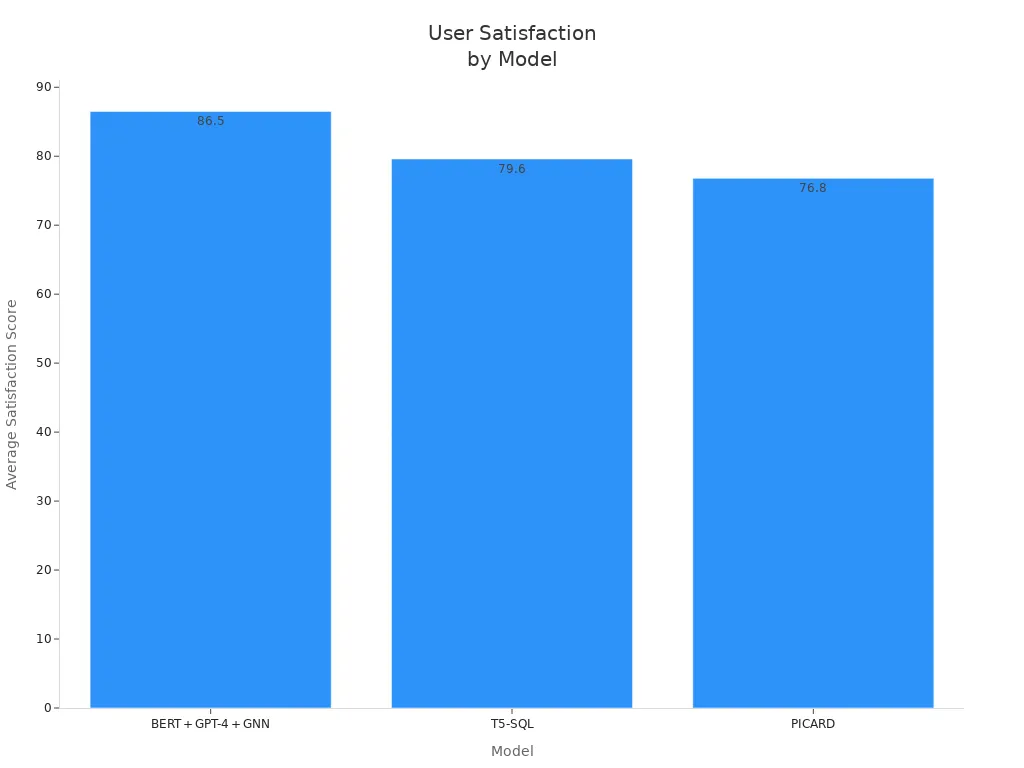
You can trust your data is secure and your insights are reliable.
You can transform your approach to data analytics with DataGPT.
DataGPT co-founder Arina Curtis said, "Our DataGPT software, rooted in conversational AI data analysis, not only delivers instant, analyst-grade results, but provides a seamless, user-friendly experience that bridges the gap between rigid reports and informed decision making."
You save time, reduce costs, and gain instant insights.
Ask questions in natural language.
Get analyst-grade answers right away.
Explore data with ease.
Feature | Benefit |
|---|---|
Quick setup | Start analyzing in one day |
Unified dashboard | See all your data in one place |
Cost-effective | Lower analysis costs |
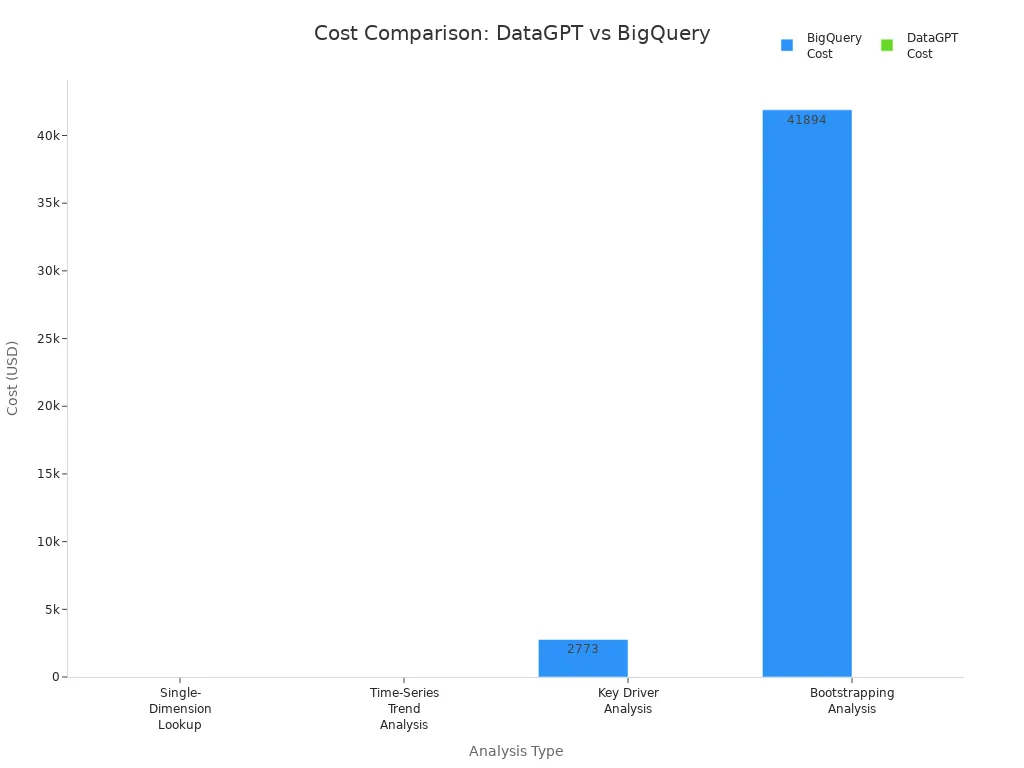
You can make smarter decisions and empower your team. DataGPT gives you instant, accessible, and reliable data analysis.
FAQ
How do you start using DataGPT?
You sign up, connect your data sources, and begin asking questions in plain English. The setup takes only a few hours. You do not need special training.
Is DataGPT secure for your business data?
Yes. DataGPT uses advanced encryption and strict access controls. You keep your data safe while you analyze it.
Can you use DataGPT with your existing BI tools?
You integrate DataGPT with popular BI platforms. This lets you view dashboards and automate reports without switching systems.
What types of questions can you ask DataGPT?
You ask about sales, trends, performance, or any business metric. DataGPT understands complex queries and gives you clear answers.
Does DataGPT require coding skills?
No coding is needed. You interact using everyday language. The system handles all technical tasks for you.
See Also
Understanding ETL Tools: Essential Insights for Beginners
Introduction to Data Pipelines: A Guide for Newcomers
Smart Data Solutions for Enterprises Leveraging AI Technology