

When Should AI Generate SQL? Intent and Metrics First
AI should generate SQL only after intent and metric definitions are resolved. A routing framework for text-to-SQL governance and accuracy.
1h 4m read
In-depth reviews of the latest digital products including smartphones, laptops, audio devices, and more to help you make informed decisions

AI should generate SQL only after intent and metric definitions are resolved. A routing framework for text-to-SQL governance and accuracy.

A valid SQL query can still answer the wrong question. Learn which checks validate SQL accuracy and which validate analytics accuracy.

What OpenAI's Data agent shipped, the semantic layer it depends on, and how to keep governed metric definitions portable across front doors.

Learn how to implement semantic validation for AI queries: resolve intent to approved definitions, check join paths and grain, and compile permissions.

Joins encode business rules about grain, ownership and which records count. See why entity relationships are a governance problem, not a schema link.

Text-to-SQL optimizes query generation, but metric resolution is the unsafe step. Why governed metrics in a semantic layer fix silent semantic errors.

LLMs draft SQL well but can't hold authority at scale. See the benchmark gaps and the five constraints that must live outside the model.

A valid query can still return the wrong business number. See how wrong joins, misplaced filters, and date boundaries change meaning with no error.
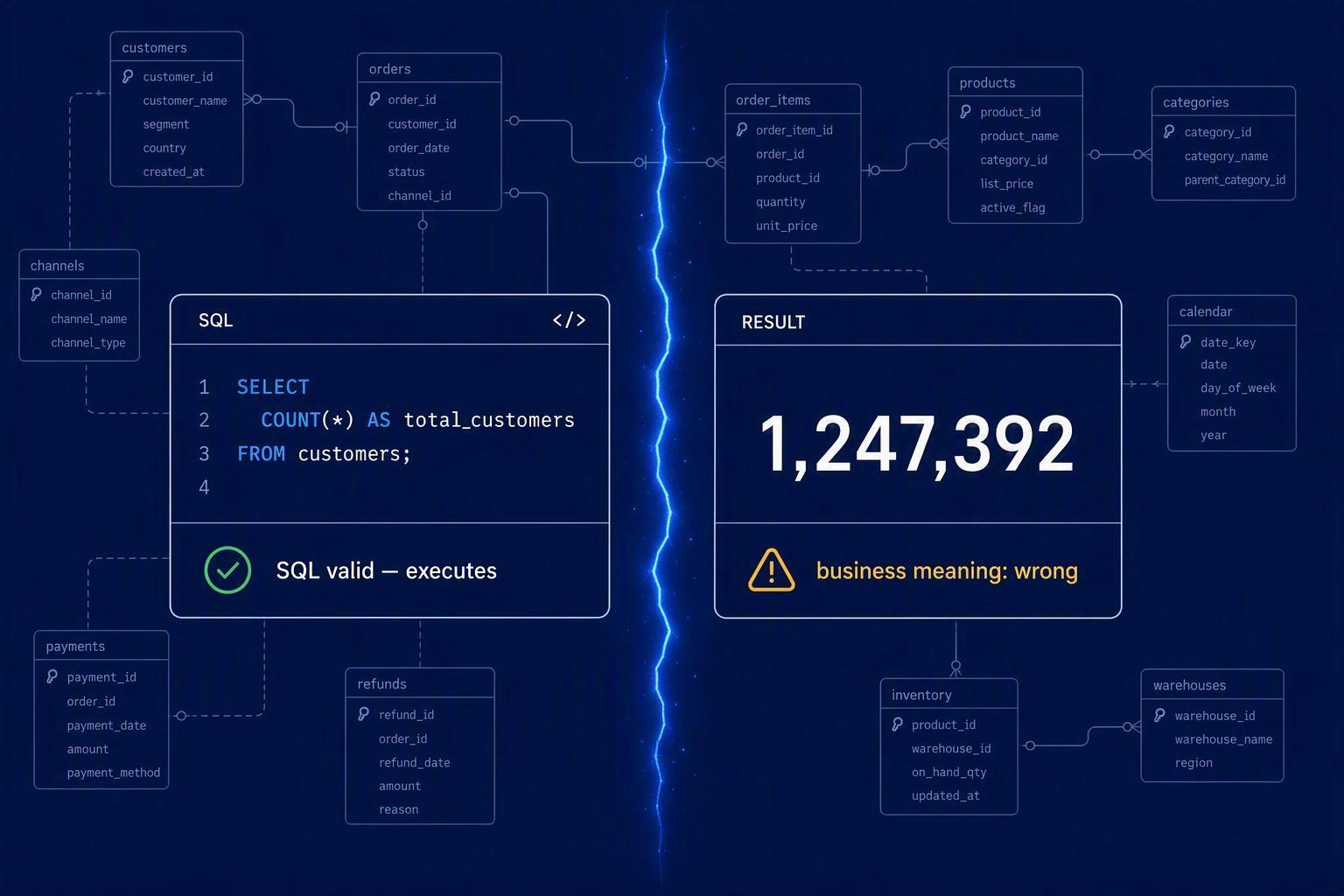
Valid SQL can still answer the wrong business question. Why text-to-SQL accuracy collapses in production, and the semantic layer that fixes it.